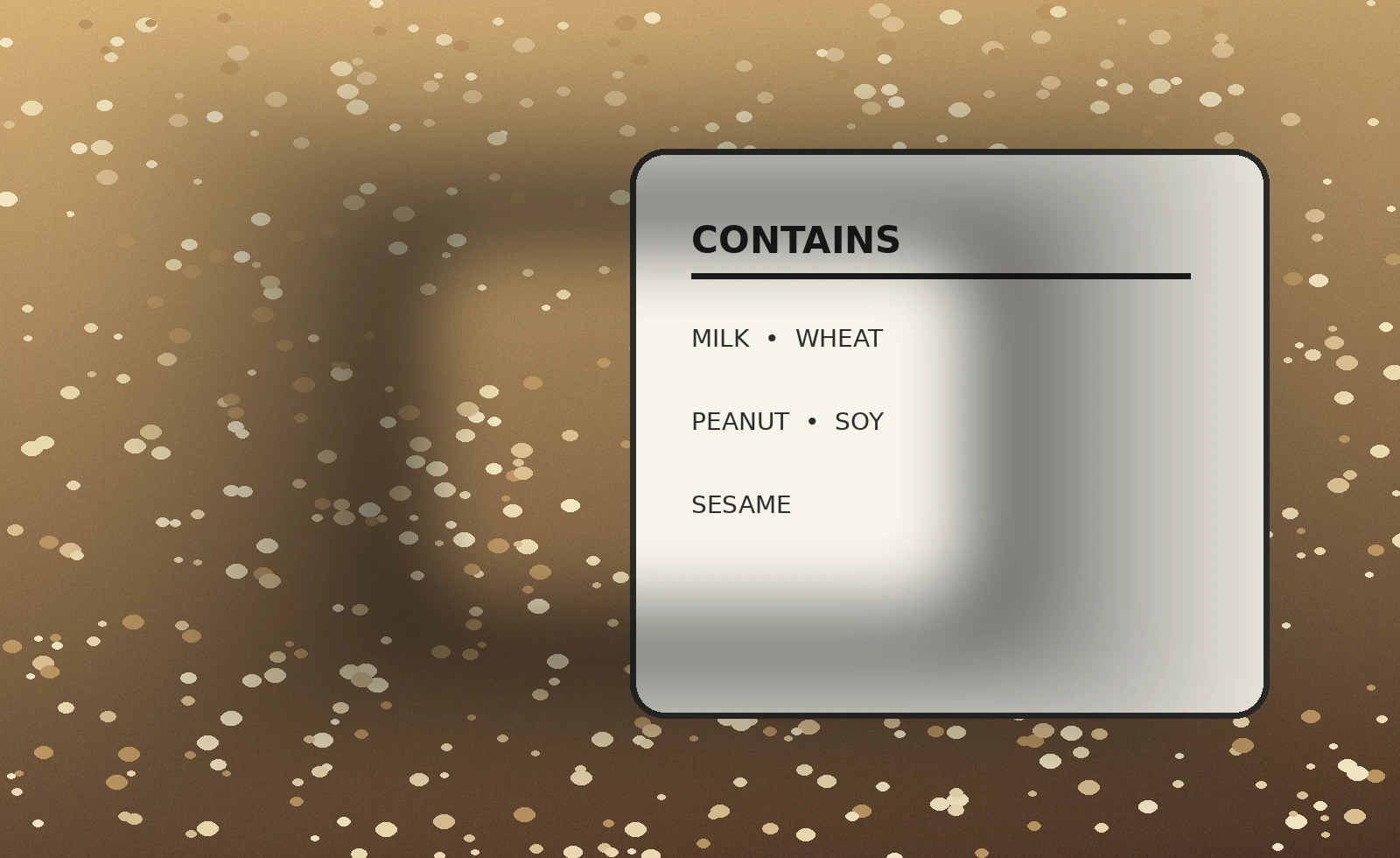
Allergen labeling deserves a dedicated review because a small formulation or supplier change can affect both the ingredient list and the allergen declaration.
The U.S. recognizes nine major food allergens
FDA identifies milk, eggs, fish, Crustacean shellfish, tree nuts, peanuts, wheat, soybeans and sesame as the nine major food allergens under federal law. The FASTER Act added sesame as the ninth major allergen, effective January 1, 2023.
Sesame must be declared when it is a major allergen ingredient
For packaged foods subject to the federal requirements, sesame can be declared through the ingredient list using its common or usual name, in a “Contains” statement, or in parentheses following the name of an ingredient, depending on the labeling format and circumstances.
“Contains” and “may contain” are not interchangeable
FDA explains that when a “Contains” statement is used, it must identify the food source names of major allergens used as ingredients. Advisory statements such as “may contain” or “produced in a facility” are voluntary and are generally used to communicate possible cross-contact rather than intentional ingredients.
Recheck allergens whenever the product changes
- Compare the current formula with the ingredient statement.
- Identify allergens in compound ingredients and flavor systems.
- Confirm supplier specifications and change notifications.
- Review both ingredient-list and “Contains” declarations together.
- Do not use precautionary language as a substitute for appropriate controls.
FDA issued updated final guidance in January 2025 addressing questions about food allergen labeling, including sesame, tree nuts, milk, eggs and certain packaging situations. Teams handling high-risk products should work from the current guidance rather than old templates.
Sources: U.S. Food and Drug Administration, The FASTER Act: Sesame Is the Ninth Major Food Allergen and Food Allergies .